
Artificial Intelligence & Emerging Technologies
Transforming Professional Education Across Disciplines
Join experts, researchers, industry leaders, and innovators from multiple disciplines to re-imagine the future of skills, training, and professional development.
Introduction
FutureED 2026 marks the first international edition of a pioneering conference dedicated to transforming professional education through Artificial Intelligence, and Emerging Technologies. This event builds upon years of global advancements in technology-enhanced learning, bringing together experts, researchers, industry leaders, and innovators from multiple disciplines to re-imagine the future of skills, training, and professional development.
FutureED 2026 will be held in Dubai, UAE in October 2026. The exact venue will be announced soon. The conference aims to serve as a strategic platform for exchanging cutting-edge knowledge, showcasing applied research, and exploring the latest technological breakthroughs shaping education, work, and industry.
All accepted papers presented at the conference will undergo peer review, and the best selected papers will be invited to submit extended versions for a prospective Scopus-indexed Routledge edited book series, edited by an international panel of distinguished scholars. FutureED aspires to become a global annual meeting point, connecting universities, researchers, industry partners, professional institutes, and policy makers while offering a truly multidisciplinary environment that encourages innovation and collaboration.


Objectives
The primary objective of FutureED 2026 is to bring together a diverse community of researchers, educators, industry leaders, and innovators to explore how Artificial Intelligence and Emerging Technologies are reshaping professional education across disciplines. The conference aims to create a central platform where global experts can present cutting-edge research, share transformative practices, and discuss the future of learning in an age defined by automation, digitalisation, and immersive technologies. A key objective of the event is to encourage interdisciplinary collaboration by connecting fields such as engineering, architecture, health sciences, business, police and security studies, IT, and environmental sciences. By bridging these knowledge domains, the conference seeks to foster new synergies that support the development of innovative teaching models, smarter learning ecosystems, and data-driven decision-making in education and training. Another central objective is to examine the real-world impact of technologies such as AI, digital twins, the metaverse, VR/AR, robotics, and advanced analytics on professional competencies and workforce development. FutureED 2026 aims to highlight both opportunities and challenges, providing a balanced academic environment for critical discussion, evidence-based evaluation, and forward-thinking solutions. The conference also aims to empower early-career researchers, postgraduate students, and practitioners by offering opportunities to showcase their work, engage with senior academics, and participate in a global dialogue on the digital future of education. Through keynote lectures, workshops, and interactive sessions, the event aspires to support capacity building and inspire the next generation of education innovators. Finally, FutureED 2026 aims to contribute to global scholarship by selecting outstanding papers for an extended submission to a prospective edited book with Routledge, ensuring long-term academic visibility and impact. By positioning the conference as a hub for high-quality research and practical innovation, the objective is to accelerate the global transition toward technology-enabled professional education that is inclusive, adaptive, and future-ready.
Important Dates
Early Abstract Submission & Registration Deadline
20 January 2026
Late Abstract Submission & Registration Deadline
5 February 2026
Abstract Acceptance Notification
15 February 2026
Full Paper Submission Deadline
TBA
Conference Dates
October 2026
Outcome Notification to Authors
7 May 2026
Abstract Acceptance
15 May 2026
Camera-Ready Submission
7 July 2026
Final Acceptance Notification
21 July 2026
Conference Chairs
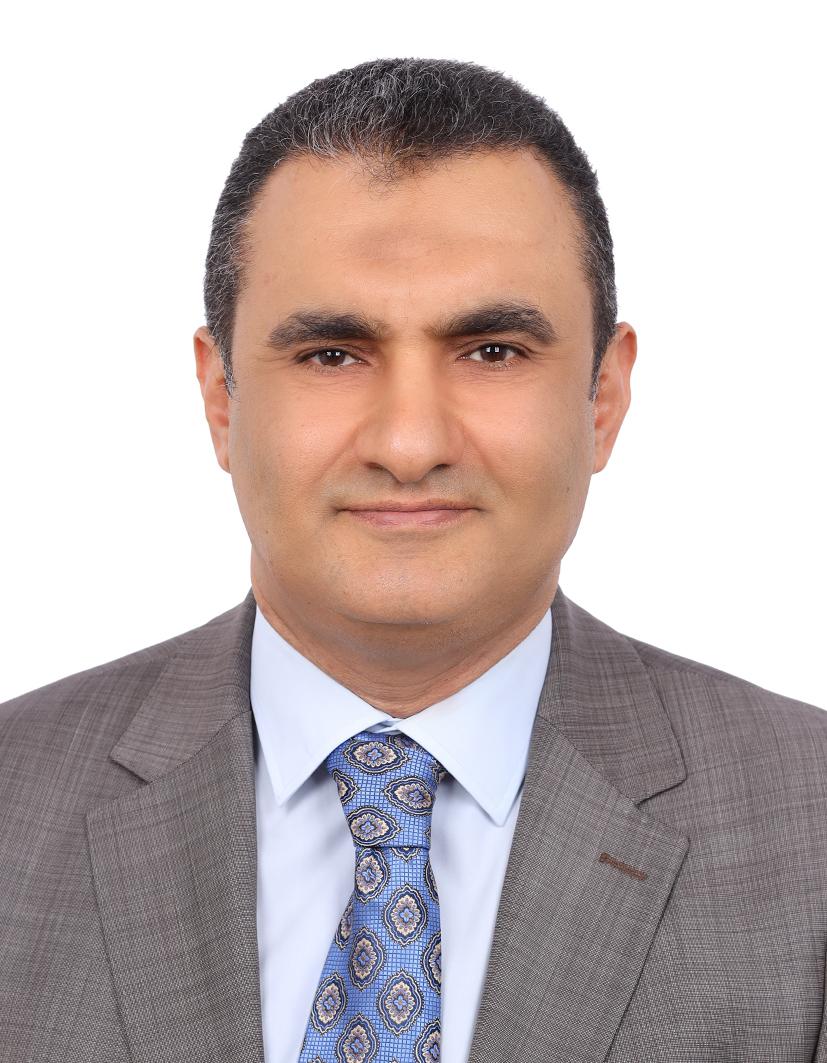
Prof. Dr. Hossam El-Shenraky
Head of Police Management Dept.
Dubai Police Academy
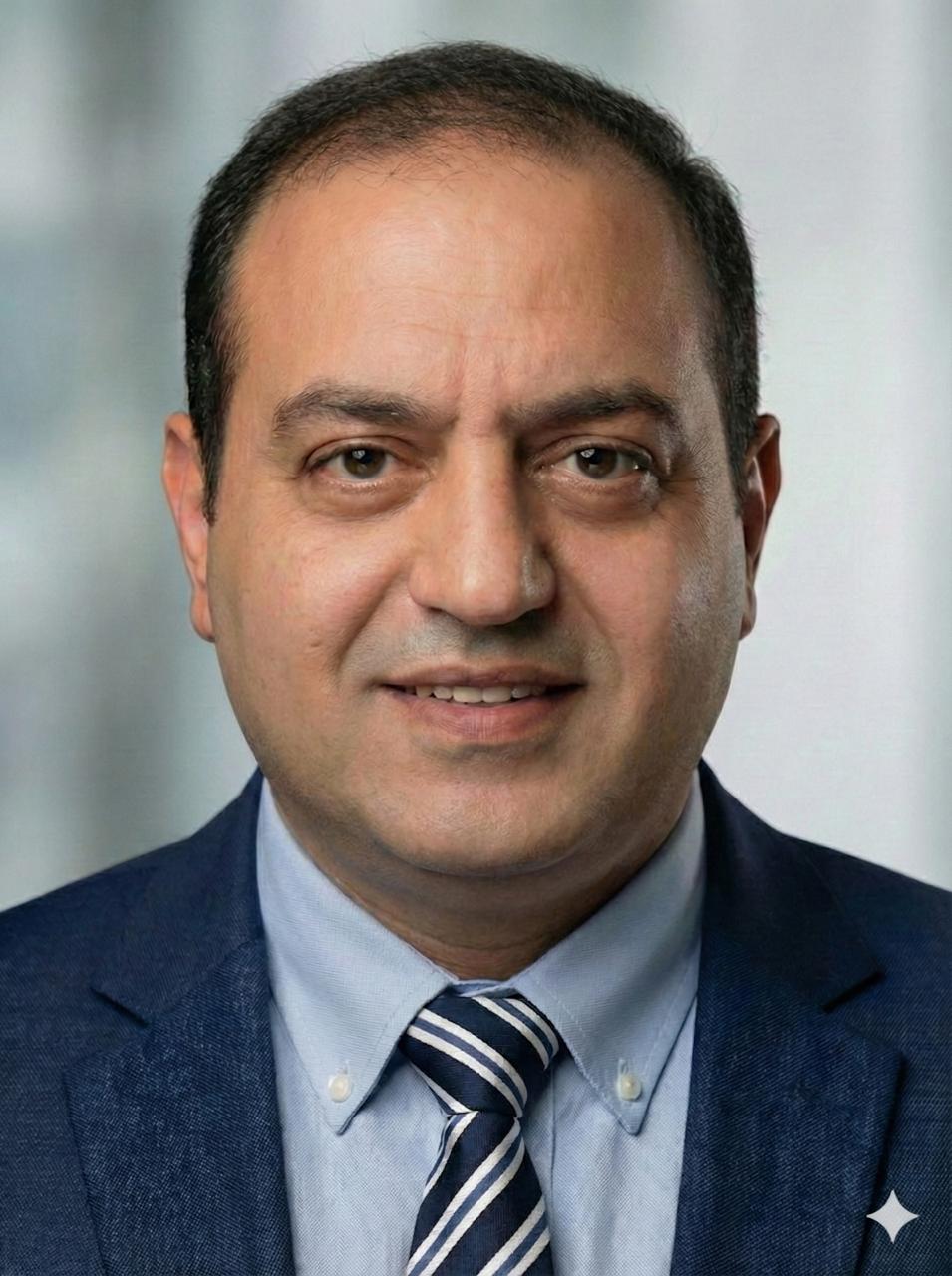
Dr. Ayman ElZemrany
Assoc. Prof. of Architecture and Planning
Alexandria University, Egypt
Publisher


FutureED 2026 is proud to collaborate with Routledge, a world-leading academic publisher and part of the Taylor & Francis Group.
Selected high-quality papers from the conference will be invited for extended submission to a prospective edited book published by Routledge, offering authors global academic visibility and impact.
Global academic distribution
Peer-reviewed publication
International editorial panel
Enhanced research credibility
Benefits of Attending
Digital Access to All Materials
All registered participants will receive full digital access to:
- Conference proceedings
- Workshop recordings
- Keynote presentations
- Speaker materials and additional resources
Provided through secure downloadable link after the event
Publication Opportunities
All accepted papers presented at the conference will undergo rigorous peer review. Outstanding contributions will receive an invitation to submit extended versions for inclusion in a prestigious Scopus-indexed edited book series by Routledge, part of the Taylor & Francis Group.
- FutureED 2026 Digital Proceedings (ISBN registered)
All accepted papers receive official acceptance letter and publication certificate
Indexing & Academic Visibility
FutureED 2026 Proceedings will be:
- Assigned ISBN
- Assigned DOI for each paper
- Submitted for indexing in Google Scholar, ResearchGate, Semantic Scholar
- DOI CrossRef database
Open-Access Digital Repository
All accepted papers stored permanently in the official Phoenix Global Education Digital Library, ensuring:
- Free global access
- Long-term visibility
- Citability and reference indexing
Peer Review Process
Maintaining highest academic standards through:
- Double-blind peer reviewing
- Plagiarism screening using professional tools
- Review by International Scientific Committee
- Peer-review reports and revision requests
High-Level Networking
Unmatched networking opportunities with:
- Global academics and researchers
- Industry leaders and government officials
- Multidisciplinary field experts
- AI, Digital Twins, XR, and Metaverse innovators
Build international collaborations and explore future research opportunities
Conference Topics
The following list covers some of the themes to be presented at FutureED 2026.
Papers on other subjects related to the objectives of the conference are also welcome.
AI in Architecture & Built Environment
Technological innovation in architectural education, design processes, and urban development.
- AI-driven generative design, parametric workflows, and optimisation models
- Digital Twin platforms for smart cities, carbon monitoring, and climate adaptation
- XR/VR/AR/MR in design studios, virtual site visits, spatial exploration, and immersive collaboration
- Data visualisation, performance analytics, and digital decision-support tools
- Smart construction, automation, and predictive risk management
- International case studies of AI and Digital Twins in built environment transformation
AI in Engineering & Automation
How automation and intelligent systems reshape industrial training and engineering practice.
- Digital Twins for industrial, mechanical, manufacturing and energy systems
- Predictive maintenance, IoT-based monitoring, and machine-learning fault detection
- Robotics, cobots, smart factories, and adaptive production systems
- Digital laboratories, learning factories and hybrid industrial training tools
- Human–machine collaboration, safety, ethics, and future engineering competencies
- Industry 5.0 frameworks and sustainable, human-centric automation
AI in Medicine & Healthcare
Emerging technologies transforming clinical education, patient simulation, and medical research.
- AI and ML in diagnostics, personalised medicine, epidemiology, and clinical decision support
- Medical Digital Twins for organs, physiology, surgery, and preventive care
- VR/AR/Metaverse-based anatomy, surgical simulation and clinical scenario training
- Data privacy, ethics, regulation (HIPAA/GDPR) and secure medical ecosystems
- Global case studies from simulation centres, XR labs and digital health innovation units
AI in Computing & Data Science
How data and intelligent algorithms support decision-making across disciplines.
- Machine Learning and Deep Learning for predictive modelling and optimisation
- Cognitive AI, conversational agents, adaptive learning, and behavioural analytics
- Big data integration, cloud infrastructures, and real-time decision dashboards
- Spatial data science, geospatial analytics, and multi-sector data fusion
- Cybersecurity, data ethics, encryption, and governance of digital ecosystems
- AI-driven simulation for policy impact, risk evaluation, and strategy design
AI & Digital Justice
Advanced technologies shaping investigation, security, and modern legal systems.
- Predictive policing and crime analytics
- Blockchain-based evidence management, biometrics, and digital forensics
- Behavioural science, psychological profiling, and AI-supported criminology
- Cybercrime analysis, digital offences in metaverse environments, and virtual policing
- Judicial analytics, automated evidence review, and AI-assisted legal processes
- Ethical implications of automated justice, transparency, and accountability
AI in Business & Management
AI applications transforming business operations, management education, and organisational strategy.
- AI-driven business analytics, forecasting, and strategic decision-making
- Digital transformation in management education and executive training
- Automation of business processes, workflow optimisation, and intelligent systems
- AI in marketing, customer experience, and personalisation strategies
- Fintech, AI in finance, risk management, and algorithmic trading
- Leadership, ethics, and governance in AI-enabled organisations
Emerging Technologies in Education
Focused on how emerging technologies reshape learning, training and global workforce development.
- Industry 4.0, Education 5.0 and Society 5.0 transitions
- Acceleration of digital adoption in the post-pandemic era
- New pedagogical models: hybrid learning, simulation-based training, competency frameworks
- Digital Twins, Metaverse and XR/VR/AR/MR for immersive skill development
- Digital skills, reskilling, lifelong learning and professional certification
- Ethical, legal, and governance frameworks for emerging technologies in education
Two-Step Submission Process
Submit Abstract
Submit your abstract for review. No payment required at this stage.
Register & Pay
After abstract approval, complete registration and payment.
Part 1: Submit Abstract
Part 2: Register & Pay
After your abstract is approved, complete your registration below and proceed with payment to confirm your participation.
Location
Dubai is one of the world's leading global hubs for innovation, smart cities, and future technologies. Recognised internationally for its rapid digital transformation, world-class infrastructure, and visionary leadership, Dubai provides the ideal environment for hosting the FutureED 2026 summit.
As the first city in the region to launch strategies for Artificial Intelligence, the Metaverse, Digital Economy, and Smart Government, Dubai has positioned itself at the forefront of technological revolution. The emirate is home to globally renowned innovation districts, including Dubai Internet City, Dubai Knowledge Village, Dubai Future District, and Dubai Digital Park, attracting major tech companies, research institutions, and future-focused entrepreneurs from around the world.
Beyond technology, Dubai offers a vibrant cultural scene, iconic architecture, and world-class entertainment. From the Burj Khalifa and Dubai Opera to futuristic projects like Museum of the Future and Expo City Dubai, the city represents a unique blend of tradition and innovation.
Conference Venue
Dubai, United Arab Emirates
FutureED 2026 will be held in Dubai, UAE — one of the world's most advanced business and innovation hubs.
Dubai offers a vibrant cultural scene, iconic architecture, and world-class entertainment. The venue will provide state-of-the-art facilities that support immersive learning, AI-driven technology showcases, and global networking experiences. More details will be announced soon.
Accommodation
Hotel recommendations will be provided once the venue is confirmed.
Stay tuned for venue and accommodation details
Premier Inn Dubai Ibn Battuta Mall
Ibn Battuta Mall, Sheikh Zayed Road
10 min taxi • Metro connected
Oaks Ibn Battuta Gate Dubai Hotel
Ibn Battuta Gate, Dubai
12 min taxi • Premium service
JA Lake View Hotel - Jebel Ali
JA Resort, Jebel Ali
8 min taxi • Resort environment
Rove Expo 2020
Expo City Dubai
15 min taxi • Modern & trendy
Travel Information
By Metro
Nearest stations: UAE Exchange (5 min taxi) or Ibn Battuta (10 min taxi) on Red Line
By Air
Dubai International Airport (DXB): ~35 minutes
From Downtown Dubai: ~30 minutes
From Dubai Marina: ~15 minutes
Taxi & Ride Services
Dubai Taxi, Careem, Uber available 24/7
Publication of Papers
Peer Review
To ensure the academic quality and integrity of all publications, all submitted abstracts, and full papers will undergo a double-blind peer-review process. Reviews will be conducted by members of the International Scientific Advisory Committee (ISAC) and invited experts across the conference disciplines.
All manuscripts will also be processed through CrossRef Similarity Check (iThenticate) to ensure originality and prevent plagiarism.
Publication
Accepted and presented papers at FutureED 2026 will be published in the FutureED Conference Proceedings, issued as a peer-reviewed edited volume under:
FutureED 2026: Artificial Intelligence and Emerging Technologies – Transforming Professional Education Across Disciplines
FutureED Proceedings Series – Phoenix Global Education Publications
Additional selected high-quality papers will be invited to submit extended versions for inclusion in a prestigious Scopus-indexed edited book series by Routledge, part of the Taylor & Francis Group.
Indexing
The FutureED 2026 Conference Proceedings will be:
Submitted for inclusion to Scopus and Web of Science – Conference Proceedings Citation Index (CPCI). Indexing acceptance depends on publisher evaluation.
All publication metadata will follow international indexing standards to maximise visibility.
Open Access & Digital Archive
All accepted papers will be permanently archived in the FutureED Open Access Digital Library, where they will be:
- Free to download worldwide
- Accessible to researchers, universities, companies, and policymakers
- Assigned stable URLs for citation and reference
- Preserved under our long-term digital archiving policy
The digital archive will be hosted at: www.futureedscience.org/library
Editorial Board

Dr. Amira ElNokaly
Assoc. Prof. of Sustainable Architecture
University of Lincoln, UK

Prof. Farzad Rahimian
Prof. of Digital Engineering & Manufacturing
Loughborough University, UK

Prof. Ashraf Abdelkader
Prof. of Criminal Investigation
Sharjah Police Science Academy, UAE
Dr. Ayman ElZemrany
Assoc. Prof. of Architecture & Planning
Alexandria University, Egypt
International Scientific Advisory Committee
Professor Hossam ElShenraki
Police Management
Dubai Police Academy, UAE

Dr. Samer ElSayary
Educational Technology
Beirut University

Dr. Heba Nabil Abdelaziz
Architecture
New Giza University, Egypt

Dr. Essam Seddik
Mechatronics & Artificial Intelligence
Arab Academy for Science, Technology & Maritime Transport, Egypt
Resources
Author Guidelines & Submission Instructions
1. Overview
The FutureED 2026 conference committee invites submissions for the international conference and associated edited academic book, FutureED 2026 – How AI & Metaverse Are Transforming Global Learning. We welcome contributions from scholars, researchers, practitioners, and industry experts.
Submissions are invited for conference proceedings, the first edition of the edited academic book, and various presentation formats including oral presentations, panels, and workshops. All accepted papers will be considered for inclusion in the conference proceedings and the edited book volume, subject to peer review and editorial approval.
2. Submission Categories
We welcome a diverse range of submissions that contribute to the conference theme. Acceptable submission categories include, but are not limited to:
- Full Research Papers: Original scholarly articles presenting new research findings.
- Conceptual Papers: Theoretical papers that develop new concepts, models, or frameworks.
- Case Studies: In-depth examinations of specific instances or examples in real-world contexts.
- Applied Research / Industry Papers: Contributions focusing on the practical application of research and insights from industry.
- Interdisciplinary and Practice-Based Contributions: Work that bridges different academic disciplines or is grounded in professional practice.
3. Abstract Submission Guidelines
All submissions must begin with an abstract submitted for initial review. The following guidelines must be strictly adhered to:
- Word Count: Abstracts must be between 250 and 300 words.
- Author Limit: A maximum of two (2) abstracts may be submitted per primary author.
- Structure: The abstract must be structured to include: Background, Methodology/Approach, and Contribution/Implications.
- Keywords: Authors must provide five (5) to seven (7) keywords that accurately reflect the paper's content.
- Language: All abstracts must be submitted in English.
4. Full Paper Submission Guidelines
Authors of accepted abstracts will be invited to submit a full paper for peer review. The requirements for full paper submissions are as follows:
- Word Count: The full paper should be between 6,000 and 8,000 words, excluding the abstract, references, and appendices.
- Originality: Submissions must be original work and must not have been previously published or be under consideration for publication elsewhere.
- Language: All papers must be written in clear, academic English.
- Review Process: All full paper submissions will undergo a double-blind peer-review process conducted by members of the conference's scientific committee and external reviewers. Final publication decisions will be made by the editorial team based on the outcomes of this review process.
5. Paper Structure Requirements
Full papers must be structured according to the following mandatory format to ensure consistency for publication. All submissions must follow the official Microsoft Word template provided.
- Title
- Author(s) and Affiliation(s)
- Abstract (as per Section 3)
- Keywords
- Introduction
- Literature Review / Theoretical Background
- Methodology / Approach
- Results / Findings and Discussion
- Conclusion
- References
6. Formatting and Style Guidelines
All manuscripts must be formatted according to the specifications in the official Word template. Key formatting and style requirements are summarized below:
- Font: Times New Roman, 12-point.
- Line Spacing: Double-spaced text.
- Margins: 1-inch (2.54 cm) on all sides.
- Heading Hierarchy: The template provides pre-formatted heading styles that must be used for all section and sub-section titles.
- Citation and Referencing: All sources must be cited in the text and listed in the references section following the APA (American Psychological Association) 7th Edition style guide.
7. Word Template Instructions
To ensure a consistent and professional standard for all publications, authors are required to use the official Microsoft Word template for their full paper submissions. The template includes pre-set styles for all structural elements of the paper, including headings, body text, and references.
Submissions that do not adhere to the formatting specified in the template may be returned to the author for revision before being sent for peer review. The use of the template is mandatory to facilitate the production of the conference proceedings and the edited book.
Download Official Word Template8. Submission Process
All submissions must be sent electronically via email to the official conference address. Please follow the instructions below:
- Submission Email: Send all documents to conference@phoenixglobaled.org
- File Format: Submissions must be in Microsoft Word format (.doc or .docx) only. PDF files will not be accepted.
- File Naming Convention: Please name your file according to the following convention:
FutureED2026_LastName_FirstName.docx. For multiple authors, use the last name of the corresponding author.
9. Important Dates
- Early Abstract Submission & Registration: 20 January 2026
- Late Abstract Submission & Registration: 5 February 2026
- Abstract Acceptance: 15 February 2026
- Full Paper Submission: TBA
- Conditional Acceptance: 7 May 2026
- Camera-Ready Deadline: 7 July 2026
- Final Acceptance: 21 July 2026
10. Publication and Ethics Statement
The FutureED 2026 conference is committed to upholding the highest standards of academic integrity. All submissions are expected to be the original work of the authors. Plagiarism in any form is unacceptable and will result in the immediate rejection of the submission.
Authors are responsible for ensuring their research adheres to all relevant ethical guidelines, including those concerning human subjects and data privacy. By submitting their work, authors affirm that they have met these ethical and academic integrity standards.
Routledge Abstract Guidelines
The abstract format and requirements for Routledge submissions can vary slightly depending on whether you are submitting a book proposal, a book chapter, or a journal article. Since Routledge is a major academic book publisher, the following guidelines apply primarily for book chapters and book proposals.
Abstract for a Book Chapter (Final Manuscript)
For a final manuscript chapter, the abstract serves as a key tool for discoverability and is typically used in online metadata, even if it is not printed in the book itself.
General Best Practices
- Keywords: Always include a list of 5–7 keywords immediately following the abstract to maximize the discoverability of your work in online databases and search engines.
- Purpose: The abstract is crucial for indexing and discoverability. Ensure it contains the most important terms and accurately reflects the content of the chapter or book.
- Journal Submissions: If you are submitting to a Routledge/Taylor & Francis journal, the required abstract length is typically shorter, often 100–200 words, and you must always check the specific journal's "Instructions for Authors."
Please refer to the Manuscript Preparation Guide and the Sample Chapter provided in the Resources section for the exact formatting and style to use.
Author Instructions
Peer Review & Quality Assurance
All submissions undergo a single-blind peer-review process, evaluated by at least two independent reviewers from the International Scientific Advisory Committee (ISAC) and relevant academic fields.
To ensure academic integrity and publication quality:
- Papers must present original contributions relevant to AI, digital twins, metaverse, emerging technologies, and their impact on professional education across disciplines
- All submissions are screened using Crossref Similarity Check (iThenticate) to detect plagiarism and ensure originality
- Manuscripts may be returned to authors for revisions if they do not meet the required academic or formatting standards
- Final acceptance requires both positive peer reviews and editorial approval
Conference Book & Publication Instructions
Selected high-quality papers presented at FutureED 2026 will be considered for inclusion in the FutureED 2026 Edited Book, edited by:
- Professor Farzad Rahimian, Professor of Digital Engineering and Manufacturing, Loughborough University, United Kingdom
- Associate Professor Amira ElNokaly, Associate Professor of Sustainable Architecture, University of Lincoln, United Kingdom
- Professor Ashraf Abdelkader, Professor of Criminal Investigation, Sharjah Police Science Academy, United Arab Emirates
- Associate Professor Ayman ElZemrany, Associate Professor of Architecture and Planning, Alexandria University, Egypt
The book is a prospective publication with a Scopus-indexed edited book series by Routledge, where selected authors will be invited to submit extended versions of their papers after the conference.
Formatting Requirements
To assist authors with preparing their manuscripts to the required standard, detailed formatting guidelines are provided:
Failure to follow formatting guidelines may delay peer review or publication.
Paper Length
- Standard manuscript length: maximum 12 pages
- Extra pages: subject to additional fees as per conference policy (€50 per page)
Open Access & Licensing
FutureED 2026 supports open-access publishing aligned with international academic standards.
Publishing Agreement
Before publication, authors (or employers) must sign:
- FutureED Open Access Publishing Agreement OR
- Declare a Creative Commons CC BY 4.0 license
Creative Commons (CC BY 4.0)
This license allows:
- Copying, distributing, and transmitting the article
- Adapting and reusing the work
- Commercial and non-commercial use
As long as full attribution to the original authors is provided. Authors choosing CC BY 4.0 grant the conference publisher a non-exclusive right to publish, distribute, and archive the contribution.
Ethical Publishing Standards
All authors must comply with the FutureED Publication Ethics Policy, which includes standards for:
Submission Support
For formatting, template issues, or questions related to manuscript preparation, authors may contact:
FutureED Production Team
conference@phoenixglobaled.org
Download Resources
Quick Facts
Abstract Length:
Maximum 300 words
Full Paper Length:
Maximum 12 pages
Language:
English only
Review Process:
Single-blind peer review
Plagiarism Check:
iThenticate (Crossref)
Important
All accepted papers must be presented at the conference (in-person or online) to be included in the official FutureED 2026 publication.